
You have been trying for a long time. Maybe months. Maybe years - and that weight does not get lighter with time. You have tracked cycles, taken tests, and heard words like "low ovarian reserve" or "diminished egg supply" delivered as if they were verdicts - and then driven home alone with that. You are not alone in that.
About one in six people worldwide experience infertility, according to the World Health Organization. In the United States, the Centers for Disease Control and Prevention reports that about one in five women struggle to get pregnant after a full year of trying. The system built to help them is failing many of them - it is expensive, often cold, and the odds are not what the brochures suggest.
This article is for women in Las Vegas and beyond who want to understand what alternative medicine actually offers before committing to a $20,000 procedure. The research is real. The numbers are real.
What the Fertility Industry Is Actually Selling You
A single IVF cycle in the United States costs between $15,000 and $30,000 when medications, lab fees, and monitoring are included, according to GoodRx. Many couples need more than one cycle. According to a survey cited by Rescripted, 70% of fertility patients went into debt from treatment costs, with nearly half carrying at least $10,000 in debt.
And those costs do not guarantee a baby.
For women with low AMH - anti-Mullerian hormone, the marker that signals how many eggs remain in the ovaries - IVF success rates drop sharply. A study published in the Middle East Fertility Society Journal found that women with AMH below a certain threshold had a live birth rate of just 14.7% per IVF cycle. For women over 40 with low reserves, pregnancy rates per cycle drop as low as 10%.
Low AMH is not the same as no fertility. The number reflects egg quantity, not egg quality. But fertility clinics will often steer low-AMH patients directly toward donor eggs or more aggressive protocols without first asking: what has this woman eaten for the last three months? How is she sleeping? What is her stress level?
That gap is where Ayurveda steps in.
What the Research Shows
Ayurveda is a medical system from India with more than 5,000 years of documented practice. It is a complete system of diagnosis, treatment, and lifestyle medicine that has been addressing fertility since before modern medicine existed.
A systematic review published in PubMed (PMID 38711705) analyzed 14 studies on Ayurvedic treatment for infertility. Following PRISMA guidelines, the review found that Ayurvedic management offers a promising, cost-effective path for infertility and can enhance IVF success rates, particularly after previous failed attempts, with positive outcomes in conception rates, sperm quality, and overall reproductive health.
A case report published in PubMed (PMID 29861596) from Amrita School of Ayurveda documented a woman with severely low AMH - just 0.07 ng/mL against a reference range of 2 to 6.80. After three months of Ayurvedic treatment including Shamana oral medication therapy and a 21-day Shodhana purification protocol, her AMH improved markedly. She became eligible for IVF using her own eggs - something that had not been possible before treatment.
A study published in the Journal of Ayurveda and Integrative Medicine documented a woman with PCOS-related infertility who had previously failed both IUI and hormone therapy. After an Ayurvedic treatment protocol combining purification and mitigation therapies, she conceived within 8 months and delivered a healthy baby girl.
A pilot study published in PubMed (PMID 24371462) examined 46 men with low sperm count. Those given Ashwagandha root extract for 90 days saw a 167% increase in sperm count, a 53% increase in semen volume, and a 57% increase in sperm motility. A PubMed review (PMID 40974515) on Shatavari found preliminary evidence that it enhances fertility rates through its active compounds, including saponins and flavonoids, and reduces oxidative stress - a key driver of poor egg quality.
A small open-label study of 100 women with various infertility causes found a 75% overall conception rate following Ayurvedic treatment with a multi-herbal formulation.
Ayurvedic fertility studies involve small samples and large randomized controlled trials are still needed. But the direction of the evidence is consistent.
Conventional vs Natural - An Honest Comparison
| Factor | IVF | Ayurvedic Approach |
|---|---|---|
| Cost per cycle | $15,000 - $30,000 (GoodRx, Forbes) | Call 972-282-3930 to discuss |
| Live birth rate, low AMH women | 10% - 14.7% (Middle East Fertility Society Journal) | Case studies show 75-84% conception rates; larger trials ongoing |
| Invasiveness | Injections, egg retrieval, embryo transfer | Diet, herbs, lifestyle, detox protocols |
| Timeline | 1 cycle: 4-6 weeks. Multiple cycles common. | 3-9 months, addresses root cause |
| Side effects | Ovarian hyperstimulation, bloating, hormonal effects | Minimal when guided by a practitioner |
| Insurance coverage | Partial in some states. Nevada has no mandate. | Typically not covered |
| What it fixes | Bypasses the problem to retrieve eggs | Works to restore the body's own fertility |
IVF does not fix the underlying reason your body is struggling to conceive. It works around it. Sometimes that is the right choice. But for many women, particularly those with low reserves and no structural blockage, the root cause is something Ayurveda was designed to treat.
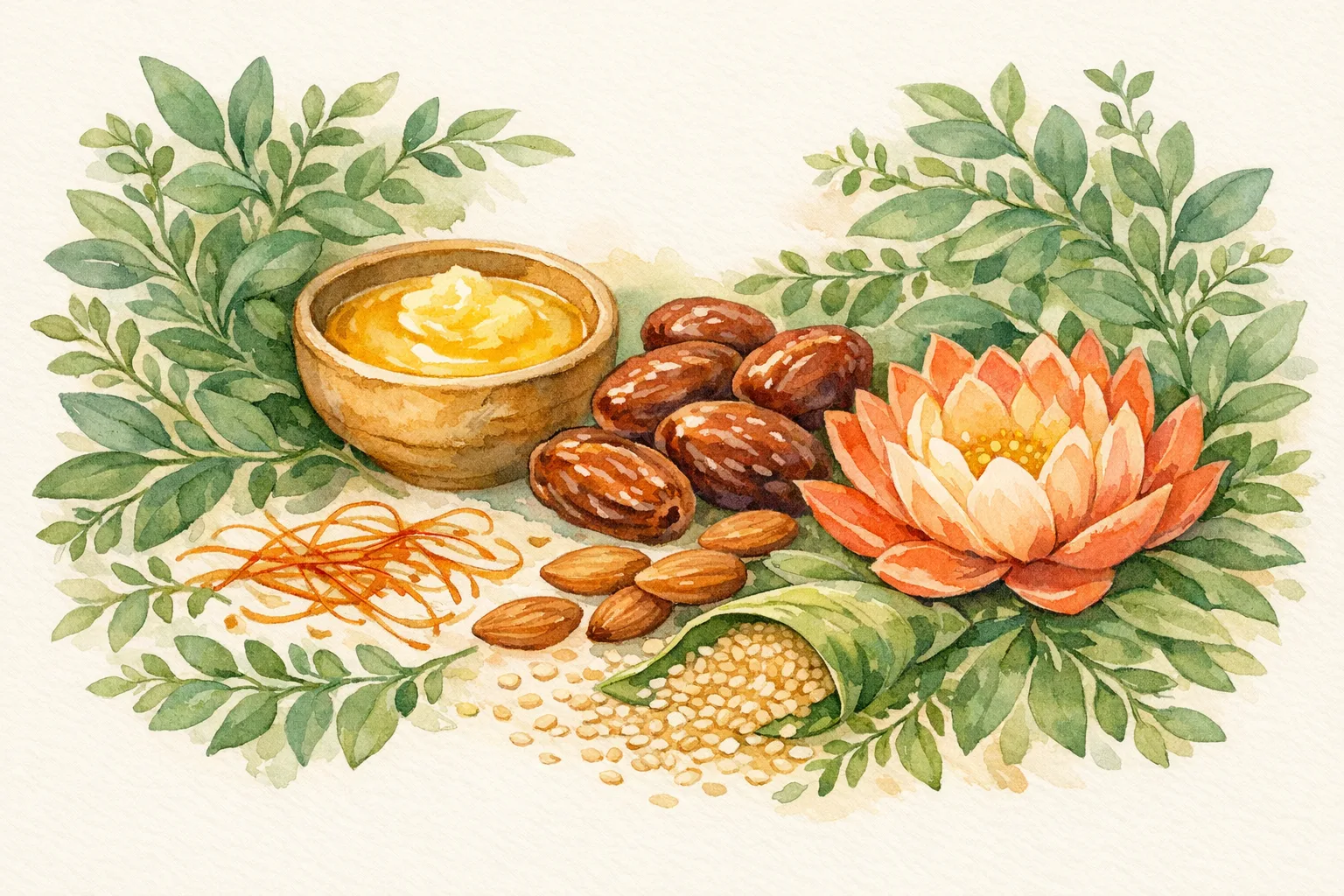 fertility foods including ghee, dates, almonds, and saffron alongside a lotus flower, representing the nourishing dietary foundation of Ayurvedic fertility treatment" style="max-width:100%;height:auto;border-radius:0.75rem" loading="lazy" />
The Ayurvedic Approach
In Ayurveda, fertility is not just about hormones. It is about the quality and nourishment of reproductive tissue, called Artava Dhatu. When that tissue is depleted - through stress, poor digestion, environmental toxins, or emotional exhaustion - the body's ability to conceive weakens.
Diet is the foundation. Warm, freshly cooked foods form the base of every meal - ghee, sesame, dates, almonds, and saffron are traditional fertility foods, and cold, processed, and packaged foods are removed entirely. Digestion and reproductive health share the same energy system in Ayurvedic physiology.
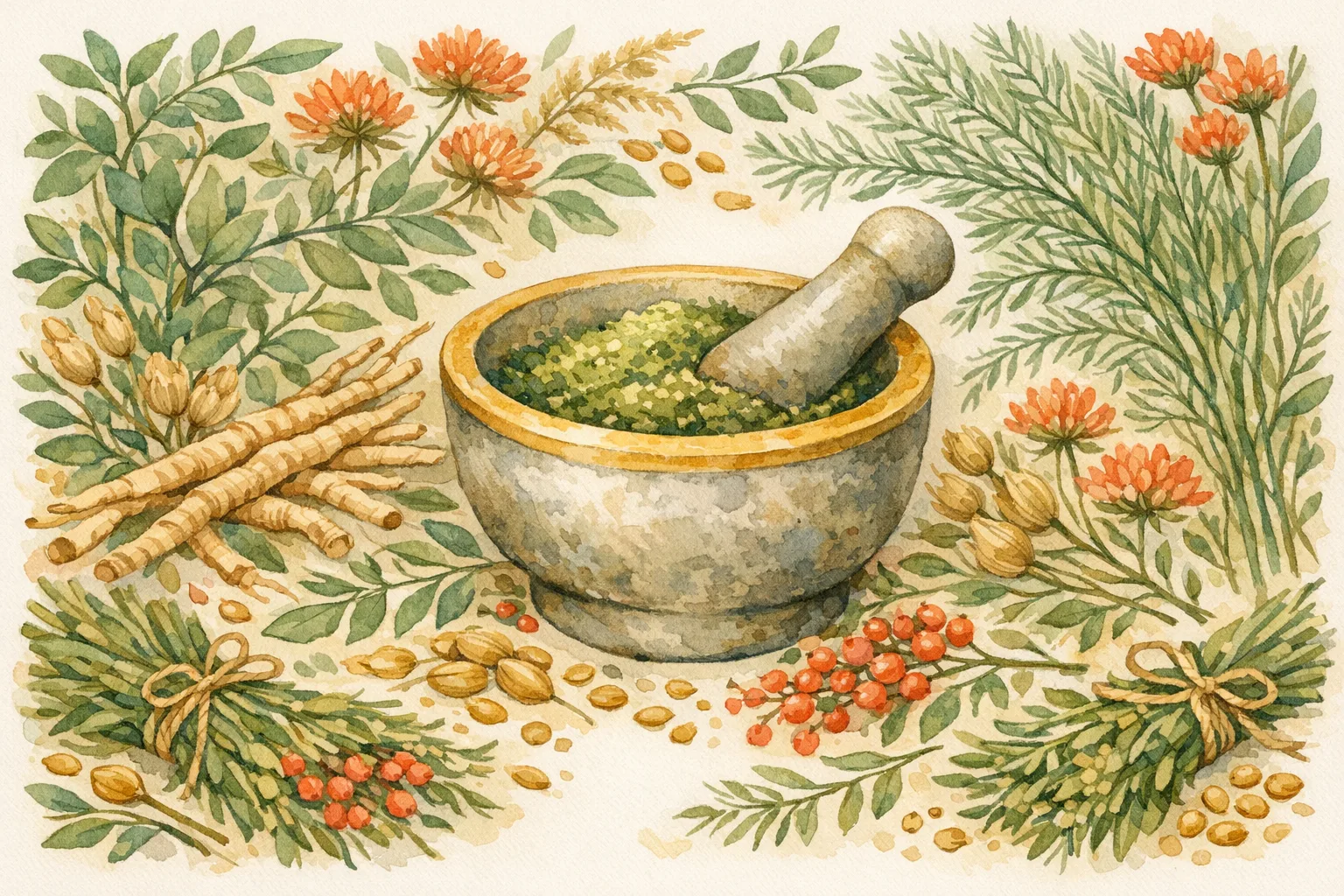
Herbs are targeted to the individual. Shatavari nourishes the uterine lining and supports healthy egg development. Ashwagandha reduces cortisol, which directly disrupts reproductive hormone balance. Dashamoola, a formula made from the roots of ten plants, helps balance hormones and regulate cycles.
Detoxification, called Panchakarma, clears the body of accumulated toxins that block reproductive function. This includes oil-based therapies, internal cleansing protocols, and restorative treatments that rebuild depleted tissue.
Sleep, movement, and stress reduction are part of the prescription. High cortisol directly reduces the hormones needed for ovulation and implantation. Ayurveda addresses this by restructuring the conditions that create the stress in the first place.
Growing up in the foothills of the Himalayas, Ayurveda was simply how people dealt with health. When a woman in the village was struggling to conceive, she consulted an older woman who knew the body, knew the herbs, and knew what the last three months of that woman's life had looked like. That conversation - holistic, personal, and grounded in generations of knowledge - is what Omioni has rebuilt in a modern context.
Why Women Are Coming to Las Vegas for This
Omioni is the only program in Las Vegas - and possibly in the United States - that brings the entire fertility protocol directly into your home. No waiting rooms. The program restructures your physical environment, your daily routines, your diet, your relationships, and your mental state. Because conception does not happen in a clinic. It happens in your life.
Women move to Las Vegas specifically to do this program.

What You Can Do Today
Get an AMH test. This is a simple blood test that tells you your current egg reserve. Low AMH is a starting point, not a final answer. A case report from Amrita School of Ayurveda showed AMH can improve meaningfully with a 3-month Ayurvedic protocol.
Remove processed food. This week. Everything packaged, fried, or made from refined sugar increases oxidative stress, which drives poor egg quality. Replace it with warm, cooked, whole food: ghee, lentils, vegetables, rice, and seasonal fruit.
Reduce screen exposure at night. Blue light from phones disrupts melatonin. Melatonin protects egg quality. Putting your phone down two hours before sleep is a fertility intervention.
Start tracking your cycle. Note the quality, color, and timing of your period. Note your energy, your sleep, your digestion. This is exactly what an Ayurvedic assessment uses to understand your root-cause picture.
Call Omioni. Before you spend $20,000 on a procedure with uncertain odds, speak with someone who has seen this work. The number is 972-282-3930.
When to Consider Each Path
Ayurveda is not the right answer for every fertility challenge. Structural blockages - blocked fallopian tubes, severe uterine abnormalities, or specific male factor issues - may require surgical or assisted reproductive intervention.
But if you have been told your AMH is low and you have no structural diagnosis, you are in exactly the category where Ayurvedic protocols have shown the most promise. The same is true if you have had one or more failed IVF cycles. The systematic review published in PubMed found Ayurvedic management specifically enhances IVF success rates after previous unsuccessful attempts.
The honest question is not: IVF or Ayurveda? The honest question is: in what order? Before a $20,000 procedure with a 14% live birth rate for low-AMH patients, a 90-day Ayurvedic protocol is a rational first step.
Frequently Asked Questions
Does alternative medicine actually work for fertility in Las Vegas?
Research published in PubMed supports Ayurvedic treatment for infertility, with positive outcomes documented in conception rates, hormone levels, and sperm quality. Omioni brings a complete Ayurvedic fertility protocol directly into your home, which is different from what any clinic in the city offers.
What is AMH and why does it matter?
AMH stands for anti-Mullerian hormone. It reflects how many eggs you have remaining. A low number suggests reduced egg reserve but does not measure egg quality and is not a final verdict. A case report from Amrita School of Ayurveda showed that an Ayurvedic protocol raised a woman's AMH from 0.07 to a viable level in three months.
How long does an Ayurvedic fertility program take?
Most protocols show meaningful changes within 90 days. Some women conceive within 6 to 9 months. The timeline depends on the individual's baseline health, age, and consistency with the protocol. Call 972-282-3930 to understand what a timeline looks like for your specific situation.
Is Ayurvedic treatment safe alongside IVF?
Research in PubMed found that Ayurvedic management can enhance IVF success rates, particularly after failed attempts. Many dietary and herbal components are compatible with IVF preparation. Always inform your reproductive endocrinologist of any herbs you are taking before beginning a stimulation protocol.
What makes Omioni different from other alternative medicine options in Las Vegas?
Most integrative clinics offer appointments. Omioni comes to your home. The program restructures your physical environment, daily diet, sleep, relationships, digital habits, mental state, and spiritual practice around conception. People relocate here specifically to do it.
Does Ayurveda work for PCOS-related infertility?
Yes. A case study published in the Journal of Ayurveda and Integrative Medicine documented a woman with PCOS who had previously failed both IUI and hormone therapy. After eight months of Ayurvedic treatment, she conceived and delivered a healthy child.
What herbs does Ayurveda use for fertility?
The most researched Ayurvedic herbs for fertility include Shatavari, which supports egg quality and uterine health; Ashwagandha, which reduces stress hormones and supports reproductive hormone balance; and Dashamoola, which regulates menstrual cycles. A PubMed review of Ashwagandha found a 167% increase in sperm count in a 90-day clinical trial. Herbs are always combined in a personalized protocol, not used alone.
Medical Disclaimer: This article is for informational purposes only and does not constitute medical advice. Ayurvedic protocols and supplements should be discussed with a qualified practitioner before use. Omioni's program is not a medical treatment and does not replace care from a licensed physician or reproductive endocrinologist. Individual results vary. If you have a diagnosed medical condition affecting fertility, consult your healthcare provider before making changes to your treatment plan.