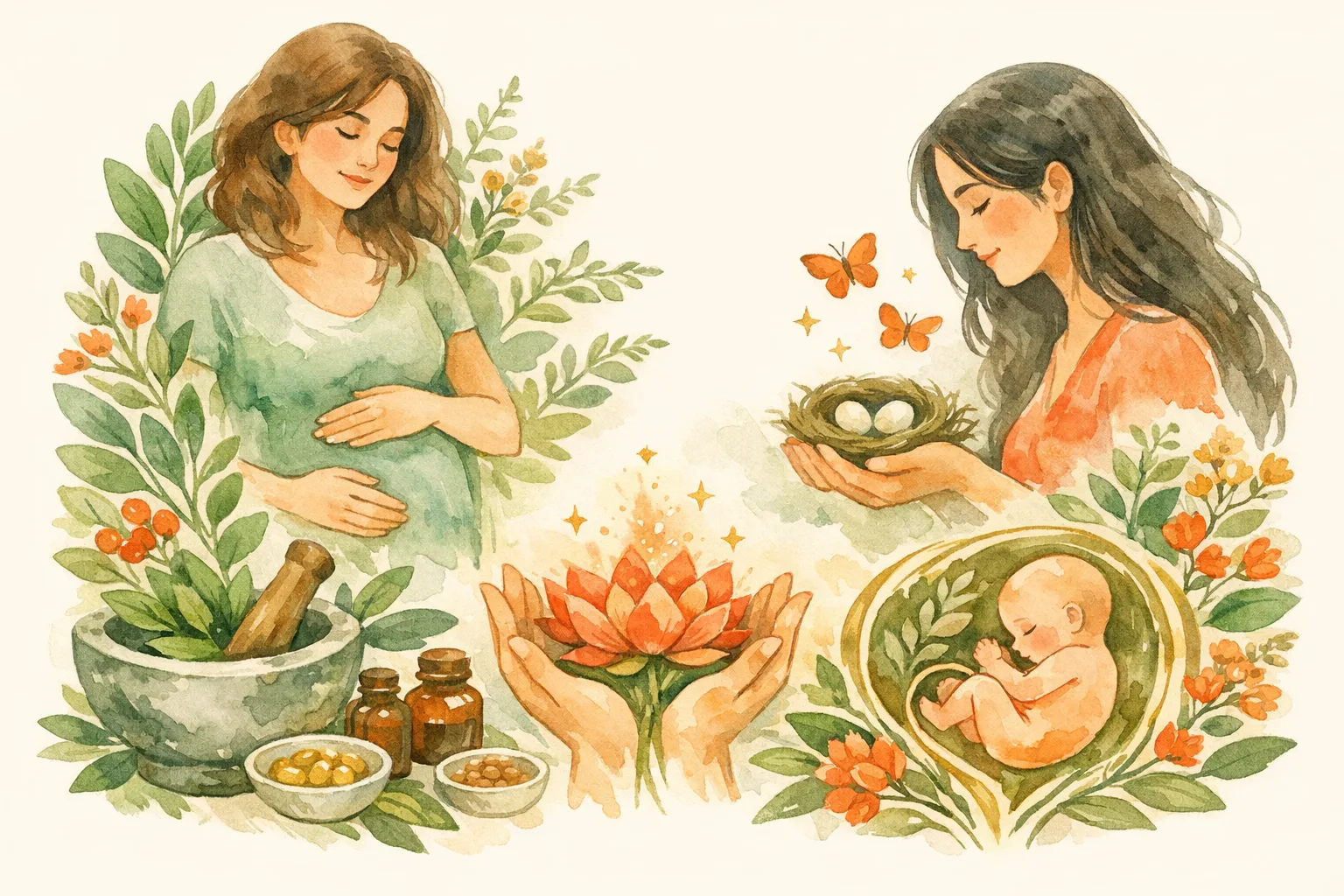
I know you are tired.
You have tracked your cycle. You have done the tests. I have sat with women in waiting rooms, flipped through brochures about IVF with them, and watched them try not to cry on the drive home. Maybe you have already spent thousands. Maybe you have been told your egg count is low, and nobody has given you a clear answer.
You are not broken. And you are not out of options.
I grew up in Chamba, Himachal Pradesh - deep in the mountains of northern India. My grandmother used herbs to treat the women in our village long before they ever saw a doctor. Shatavari, ashwagandha, turmeric - these were not exotic. They were medicine. They were what worked.
Then I came to America and saw something that broke my heart. Couples spending $30,000 or $50,000 on IVF. Cycles failing. Marriages under strain. And nobody telling them: there is another path. A path with thousands of years of use behind it, and modern research is now starting to validate it.
That is why we built Omioni. And that is what this article is about.
The Problem Nobody Is Talking About
About 1 in 6 people worldwide experience infertility, according to the World Health Organization. In the United States, the global fertility supplements market alone is now worth over $2 billion.
Walk into any health food store and you will find dozens of bottles labeled "fertility support." Some have real evidence behind them. Some do not. The difference matters - because you are not shopping for a protein bar. You are making decisions about your body, your family, and often, tens of thousands of dollars.
What Conventional Medicine Offers - And What It Costs
IVF is the gold standard treatment for many types of infertility. For some women - particularly those with blocked tubes or certain structural issues - it is the right path.
But the cost is staggering. According to the American Society for Reproductive Medicine, a single IVF cycle costs about $12,400 before medications and genetic testing. Add those in, and one complete cycle can run $15,000 to $30,000.
Most women need more than one cycle. According to FertilityIQ, the average patient undergoes 2.3 to 2.7 IVF cycles before a successful birth - putting total spending at $50,000 or more for many couples. Only about 20 to 25% of Americans have any IVF insurance coverage.
A woman with low ovarian reserve walks into a fertility clinic. She is quoted $20,000 to $25,000 for a cycle. Her chances of a live birth per cycle may be well below 30%. She deserves to know all her options before she signs anything.
An Ayurvedic fertility program like Omioni typically costs a fraction of a single IVF cycle.
What the Research Shows
The evidence is not yet strong enough to make universal supplement recommendations for fertility. Many studies use different doses. Long-term outcomes like live birth rate are rarely tracked.
But inside that same body of research, specific supplements show real, measurable effects. A network meta-analysis published in PMC - covering 30 randomized controlled trials and nearly 4,000 patients - found that certain supplements clearly move the needle on egg quality, fertilization rates, and clinical pregnancy rates.
CoQ10 (Coenzyme Q10)
CoQ10 is an antioxidant your body makes naturally. It powers the energy production inside your eggs. CoQ10 levels drop with age - and egg quality drops with it.
A systematic review and meta-analysis published in Annals of Medicine - covering six randomized controlled trials and 1,529 women with low ovarian reserve - found that CoQ10 supplementation before an IVF cycle was significantly linked to a higher clinical pregnancy rate (odds ratio 1.84, meaning nearly double the odds), more eggs retrieved, and more high-quality embryos.
A randomized controlled trial published in the Journal of Population Therapeutics and Clinical Pharmacology looked at 80 women with low ovarian reserve taking 200 mg/day of CoQ10 for eight weeks before IVF. The CoQ10 group had significantly more eggs retrieved (6.2 vs 3.9), more mature eggs (4.8 vs 2.9), and a higher fertilization rate (68.4% vs 52.3%). Clinical pregnancy rates in the CoQ10 group were 35% vs 17.5% in the control group.
For a woman with low ovarian reserve, those numbers represent a meaningful improvement in outcomes - at a cost of roughly $20 to $60 per month.
Myo-Inositol
Myo-inositol is a naturally occurring compound involved in how your body responds to insulin and how your eggs mature. In women with PCOS - the most common cause of ovulatory infertility - myo-inositol levels in follicular fluid are significantly lower than normal.
A meta-analysis published in PMC covered 17 randomized controlled trials in women with PCOS undergoing assisted reproductive technology. It found that myo-inositol supplementation significantly increased clinical pregnancy rate (relative risk 1.64) and top-grade embryos.
A commentary published in Reproductive BioMedicine Online notes that current international guidelines do not endorse myo-inositol as a first-line treatment for PCOS infertility, and that stronger evidence is still needed. The honest summary: myo-inositol shows promise, particularly for PCOS, but works best as part of a broader protocol.
Folic Acid
This is the one supplement with near-universal agreement. The American College of Obstetricians and Gynecologists recommends 400 micrograms per day for all women of reproductive age. Folate supports the DNA processes critical for early embryo development. Deficiency is linked to developmental problems and worse outcomes in assisted reproduction.
If you are trying to conceive and you are not already taking folic acid, start today.
Vitamin D
About 70% of pregnant women are vitamin D deficient. Research published in Frontiers in Endocrinology found that adequate vitamin D levels are linked to higher pregnancy and ovulation rates, lower androgen levels, and lower early miscarriage rates in PCOS patients. The PMC network meta-analysis found that combining probiotics with vitamin D showed the strongest increase in clinical pregnancy rate among all supplement combinations studied (relative risk 1.29).
If you have not had your vitamin D level checked, ask your doctor at your next visit.
The Ayurvedic Approach
Ayurveda is a medical system that has been treating reproductive health for more than 5,000 years. In Ayurvedic medicine, fertility depends on four factors: the timing of conception, the health of the reproductive tract, nutritional support, and egg quality. Treatment addresses all four at once - not just one hormone, not just one symptom.
My grandmother would watch the women in our village. She would see when someone was depleted - exhausted, cold, anxious - and she would know: this body is not ready to grow a baby. She would feed them, rest them, and give them herbs. Most of the time, it worked.
Shatavari - The Queen of Ayurvedic Fertility Herbs
Shatavari (Asparagus racemosus) contains compounds called shatavarins - natural plant-based estrogen-like molecules - that interact with estrogen receptors in the body. It also has antioxidant and anti-inflammatory properties.
A 12-week randomized, double-blind, placebo-controlled trial published in Frontiers in Endocrinology enrolled 70 women with PCOS. Women who took Shatavari root extract showed significant reductions in psychological stress, significant decreases in follicle count, and a significant increase in endometrial thickness compared to placebo. A thicker lining improves the chances that an embryo can implant. Only mild adverse events were reported, in 11.4% of the Shatavari group versus 8.5% in the placebo group.
A separate randomized clinical trial published in the International Journal of Pharmaceutical Sciences and Research looked at a Shatavari-based formula in 60 PCOS patients. All treated groups showed reduced ovarian volume. Endometrial thickness improved across all groups. The regimen was beneficial to 94% of patients overall.
Ashwagandha - The Stress-Fertility Connection
Chronic stress raises cortisol levels, which suppresses the hormonal signals needed for ovulation. A woman who is exhausted and anxious is often fighting her own stress hormones as much as any physical condition.
Ashwagandha (Withania somnifera) is an adaptogen that modulates the stress response and reduces cortisol. A double-blind, placebo-controlled trial published in Frontiers in Reproductive Health found that ashwagandha root extract supports hormonal balance and stress resilience in women. For a woman with stress-disrupted cycles, reducing cortisol may be the most important thing she can do.
Turmeric (Curcumin)
Turmeric is the most studied Ayurvedic herb in modern fertility research. In the PMC network meta-analysis of 30 clinical trials covering nearly 4,000 patients, curcumin showed the highest effect size for oocyte retrieval (mean difference 6.96) and fertilization rate (mean difference 9.02) among all supplements studied.
Curcumin is anti-inflammatory and antioxidant. Chronic inflammation disrupts ovarian function. Reducing it directly improves the environment in which eggs develop.
Conventional vs Natural - An Honest Comparison
| Factor | IVF | Ayurvedic Fertility Program |
|---|---|---|
| Cost per cycle/program | $15,000 - $30,000 per cycle; most women need 2-3 cycles | Fraction of a single IVF cycle |
| Live birth rate (general) | ~29% per fresh transfer cycle (varies by age) | Varies by condition; herbs like Shatavari show 94% benefit rate for PCOS symptoms in clinical trial |
| Invasiveness | Hormone injections, egg retrieval under sedation, embryo transfer | Oral herbs, dietary changes, lifestyle protocol |
| Side effects | Ovarian hyperstimulation, mood changes, bloating, multiple pregnancy risk up to 36% with gonadotropins | Generally mild; Shatavari trial showed only 11.4% minor events, all manageable |
| Insurance coverage | Only ~20-25% of Americans are covered; most pay fully out of pocket | Not typically covered, but dramatically lower cost baseline |
| Timeline | One cycle: 2-6 weeks of active treatment; full journey often 6-18 months | 12-week minimum for herbs to take effect; Omioni program: 12 months |
| Addresses root cause | Bypasses root cause (retrieves eggs, fertilizes outside body) | Works on improving hormonal environment, egg quality, stress, and uterine lining from within |
IVF does not fix egg quality. It works with whatever eggs you have. If an Ayurvedic protocol can improve that baseline - and the research on CoQ10, Shatavari, and curcumin suggests it can - then that work matters whether you pursue natural conception or eventually move to IVF.
What You Can Do Today
1. Get your vitamin D checked. Call your doctor this week and ask for a 25-hydroxyvitamin D blood test. If you are deficient - and most women are - supplementing costs less than $10 a month and the evidence for fertility benefit is clear.
2. Start folic acid today. The American College of Obstetricians and Gynecologists recommends 400 micrograms per day for all women trying to conceive.
3. Look at your stress load honestly. If you are running on empty - poor sleep, chronic anxiety, skipped meals - your body is signaling that it is not safe to grow a baby. Read more about the stress-fertility connection at omioni.com/blog/stress-and-fertility.
4. Consider a 90-day Ayurvedic protocol. Shatavari, ashwagandha, and curcumin each take time to work. The clinical trials that show results use 8 to 12 weeks of consistent supplementation. Learn more at omioni.com/blog/ayurvedic-fertility-protocol.
5. Evaluate CoQ10 if you have low ovarian reserve. If you have been told your egg count is low, or if you are over 35, CoQ10 is the supplement with the strongest clinical evidence for your specific situation. Discuss this with your doctor or with an Ayurvedic practitioner.
6. Know your numbers before you commit to IVF. Ask for your anti-Müllerian hormone level and a full hormone panel. You have the right to a complete picture before agreeing to a $20,000 treatment cycle. Read more at omioni.com/blog/amh-testing-and-fertility.
When to Consider Each Path
Consider a natural and Ayurvedic approach first if:
- You have PCOS, irregular cycles, or elevated stress hormones
- You have been trying for less than 12-18 months and have no known structural blockage
- You are under 38 and have mild to moderate low ovarian reserve
- You have had one or two failed IVF cycles and want to improve egg quality before trying again
- You want to understand your body before you subject it to hormone stimulation
IVF or conventional medicine is likely the right primary path if:
- You have confirmed blocked fallopian tubes (tubal factor infertility)
- You have severe male factor infertility
- You are over 42 with very low ovarian reserve and have a time-sensitive situation
- You have a genetic condition that requires embryo screening before transfer
Many women do both. They use an Ayurvedic protocol to improve their starting point - better egg quality, a healthier uterine lining, lower stress hormones - and then proceed to IVF if needed.
If you want to talk through your specific situation, call us at 972-282-3930.
The Evidence Is Real - and It Is Growing
The Western Sydney University umbrella review notes that evidence for most fertility supplements is still classified as "low certainty" by GRADE standards. That means more large trials are needed before we can make universal clinical recommendations.
"Low certainty" does not mean "no effect." It means "we need more data." And what the data we do have shows is consistent: CoQ10 nearly doubles clinical pregnancy rates in women with low ovarian reserve. Myo-inositol increases clinical pregnancy rates by 64% in PCOS patients undergoing assisted reproduction. Shatavari improves endometrial thickness and reduces stress in PCOS women in a double-blind trial. Curcumin shows the largest effects on oocyte retrieval and fertilization of any supplement studied across 30 trials.
Take the Next Step
Omioni is an Ayurvedic fertility program based in Las Vegas. We work with women who are trying to conceive and want a science-backed, whole-body approach before or alongside conventional treatment. Our program runs 12 months. We stand behind it with a money-back guarantee.
Call us at 972-282-3930. We will listen to your story, look at your history, and give you an honest assessment of where Ayurvedic medicine can help.
You can also explore more resources at omioni.com/blog/low-amh-fertility and omioni.com/blog/pcos-natural-treatment.
Frequently Asked Questions
What is the best fertility supplement for women with low ovarian reserve?
Based on the strongest available clinical evidence, CoQ10 is the most studied supplement for women with low ovarian reserve. A meta-analysis in Annals of Medicine covering 1,529 women found CoQ10 pretreatment was linked to nearly double the clinical pregnancy rate, more eggs retrieved, and more high-quality embryos. Ayurvedic herbs like Shatavari and curcumin also show meaningful effects in clinical trials and address root causes like hormonal imbalance and oxidative stress that drive poor egg quality.
How long does it take for fertility supplements to work?
Eggs take about 90 days to fully mature. Any supplement that works at the cellular level - CoQ10, curcumin, Shatavari - needs at least 8 to 12 weeks to show measurable effects. Commit to at least 3 months before evaluating the results.
Are Ayurvedic herbs safe to take while trying to conceive?
The Shatavari clinical trial published in Frontiers in Endocrinology found only mild, manageable side effects in 11.4% of participants - comparable to placebo. Ashwagandha and turmeric have long safety records in traditional use. Dosages matter and some herbs interact with medications. Always tell your doctor what you are taking, and work with a practitioner who understands both Ayurvedic and conventional medicine.
Can fertility supplements replace IVF?
For some women, yes. For others, no. If you have blocked tubes, severe male factor infertility, or very low ovarian reserve at an advanced age, IVF may be the most direct path. But for women with PCOS, mild hormonal imbalance, or unexplained infertility, a structured Ayurvedic protocol is worth trying first - it is far less expensive, far less invasive, and the emerging research is promising. Many women at Omioni conceive naturally during their 12-month program without ever needing IVF.
Is myo-inositol worth taking for PCOS?
The evidence leans positive. A meta-analysis in PMC found myo-inositol increased clinical pregnancy rates by 64% in PCOS women undergoing assisted reproduction. However, current guidelines do not yet endorse it as a first-line standalone treatment. Myo-inositol may help, particularly for PCOS with insulin resistance, but works best as part of a broader protocol.
Why is vitamin D important for fertility?
About 70% of pregnant women are vitamin D deficient. Vitamin D helps regulate your menstrual cycle, supports the immune response needed for implantation, and modulates the hormonal axis that controls ovulation. Research in Frontiers in Endocrinology found that supplementing vitamin D in PCOS patients was linked to higher pregnancy and ovulation rates, lower androgens, and fewer early miscarriages. It is cheap, safe, and easy to test for.
What does an Ayurvedic fertility program actually involve?
A structured Ayurvedic fertility program like Omioni addresses four things at once: nutrition (foods that build reproductive tissue and reduce inflammation), herbal support (specific herbs matched to your body type and condition), stress reduction (because cortisol directly suppresses ovulation), and cycle awareness (timing intercourse and treatment around your specific hormonal pattern). Learn more at omioni.com or call 972-282-3930.
Medical Disclaimer: This article is for informational purposes only. It is not medical advice and does not replace the guidance of a licensed healthcare provider. Fertility conditions vary by individual. Do not start, stop, or change any treatment without consulting your doctor. Statements about Ayurvedic herbs and fertility supplements are based on published research as cited; individual results vary. Omioni does not diagnose or treat medical conditions.