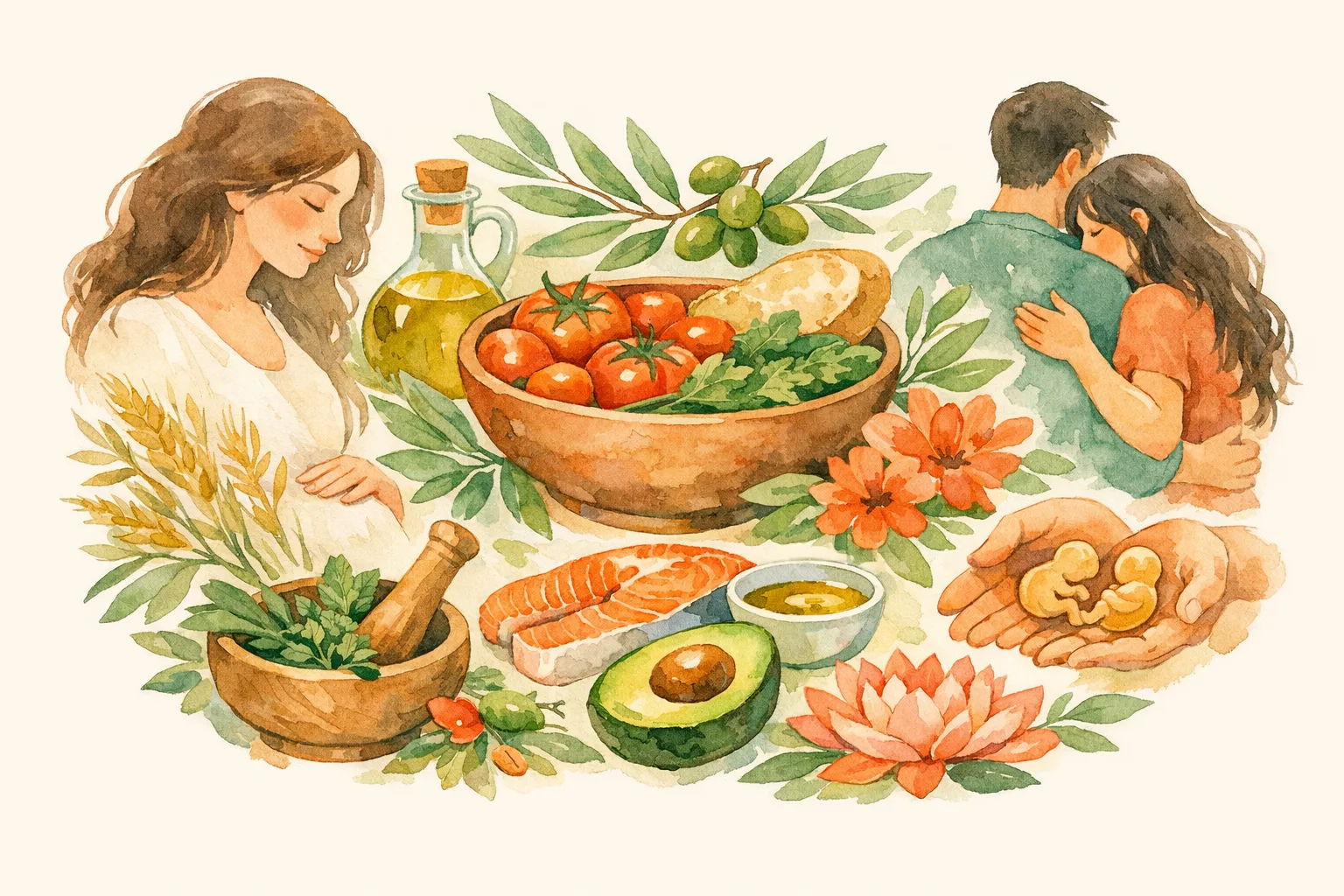
You Have Tried So Hard Already
You changed what you eat - and cut sugar, started supplements, read every article you could find. And you are still waiting.
That exhaustion is real. The hope and the disappointment and the trying again - all of it is real. You are not doing anything wrong. You just may not have the full picture yet.
The Mediterranean diet is one of the most researched diets for fertility. The evidence is real. But it is also limited in ways that most articles will not tell you. This article will tell you everything - what the research actually shows, where it stops short, and what to do about it.
What Is the Mediterranean Diet
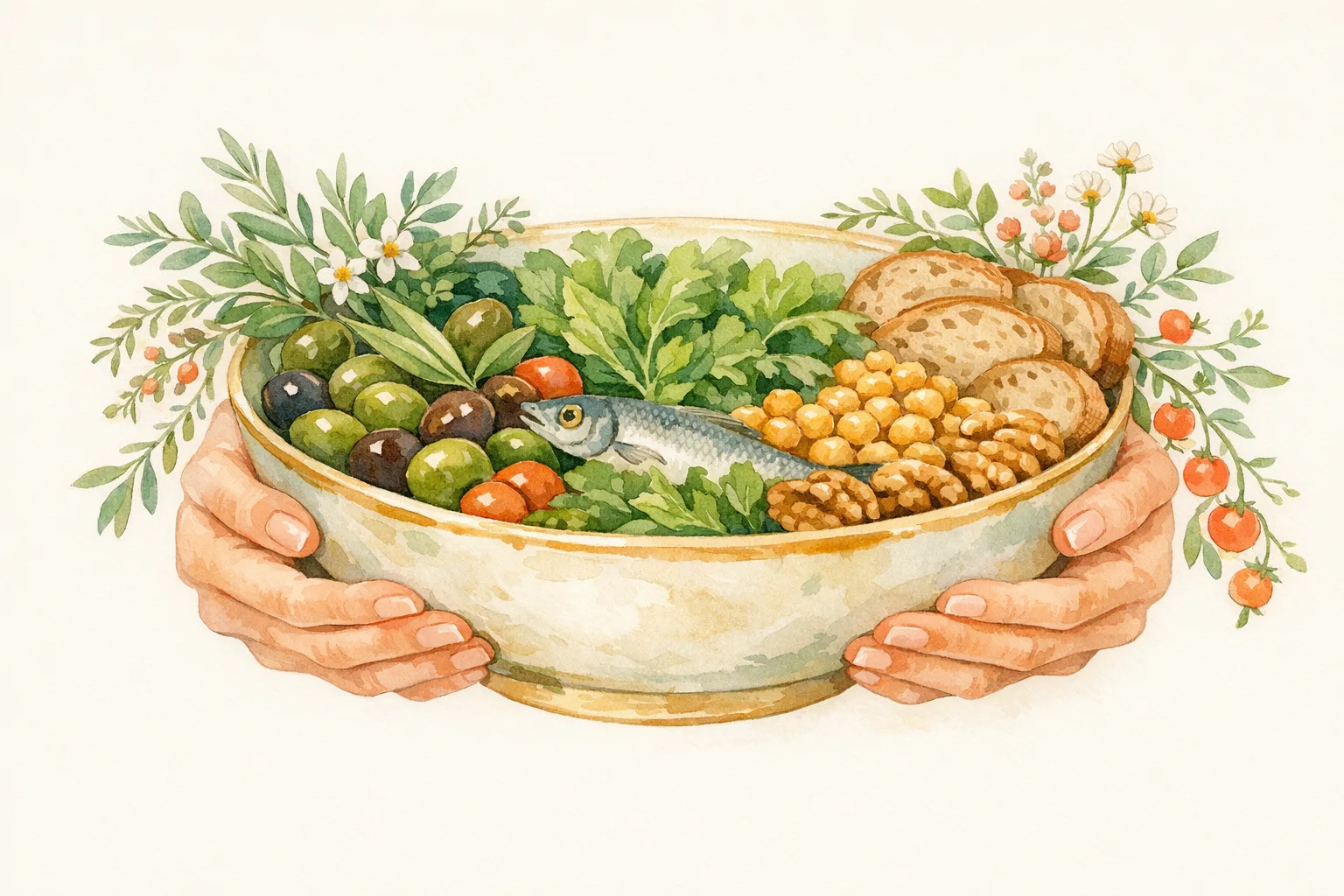
The Mediterranean diet comes from the eating patterns of countries bordering the Mediterranean Sea - Greece, Italy, Spain, and others. The foods at its center are olive oil, vegetables, fruits, whole grains, legumes, nuts, and fish. Red meat is eaten rarely. Processed foods, refined sugar, and trans fats are mostly avoided. The diet is naturally high in antioxidants, omega-3 fatty acids, folate, and fiber.
What the Research Shows
For Women
A landmark study published in the journal Human Reproduction by Dr. Karayiannis and colleagues followed 244 women undergoing their first IVF cycle in Athens, Greece. Women who followed the Mediterranean diet most closely were significantly more likely to get pregnant and have a live birth. Women in the lowest diet adherence group had roughly 75% lower odds of a live birth compared to women in the highest adherence group.
That is a large difference from food alone.
A separate prospective study published in Reproductive Biology and Endocrinology, following 590 women undergoing IVF, found that higher Mediterranean diet adherence was linked to more embryos available during IVF - an average of 8.4 embryos versus 7.4 in the lower adherence group. That is one more viable embryo per retrieval, which can matter enormously when every embryo counts.
A review published in Nutrients examined multiple studies and found that couples with better Mediterranean diet adherence were 40 to 100% more likely to achieve clinical pregnancy. Live birth rates were reported as 2.5 times higher in women who followed the diet more closely.
A case-control study published in BMC Nutrition looked at 472 women and found that higher Mediterranean diet adherence was associated with a 41% reduced risk of polycystic ovary syndrome (PCOS). PCOS is one of the most common causes of infertility.
For Men
About 40 to 50% of infertility cases involve a male factor, according to a cross-sectional study published in the European Journal of Obstetrics and Gynecology. Diet affects sperm just as much as it affects eggs.
A study published in Human Reproduction by Dr. Karayiannis followed 225 men from fertility clinic couples. Men in the lowest Mediterranean diet adherence group had roughly 2.6 times higher likelihood of having abnormal sperm concentration, sperm count, and motility compared to men who followed the diet most closely.
A meta-analysis published in the journal Nutrients, covering 8 studies and 1,835 individuals, found that Mediterranean diet adherence showed a significant positive association with sperm count, total motility, progressive motility, and normal sperm shape.
A cross-sectional study published in Nutrients found that high Mediterranean diet adherence was associated with better sperm quality even in men with elevated hormone markers that typically signal impaired sperm production. Diet helped men who would otherwise be considered poor candidates.
The Honest Limitations
The research is promising. But it is not settled. A literature review published in Nutrients covering multiple studies found that the results are mixed. Two studies found no significant link between Mediterranean diet adherence and final IVF outcomes. Four studies found no effect on egg or embryo number or quality.
Part of the problem is that studies measure adherence differently. There is no single agreed-upon way to score how closely someone follows the diet. That makes it hard to compare results across studies.
The research does not prove cause and effect. A woman who eats well may also sleep better, stress less, and live in a healthier environment overall.
The Mediterranean diet supports fertility. But diet alone rarely solves fertility problems.

How the Mediterranean Diet Supports Fertility - The Mechanism
Three things damage reproductive health at the cellular level: inflammation, oxidative stress, and insulin resistance. The Mediterranean diet targets all three.
Inflammation. Chronic inflammation disrupts hormone signaling and makes implantation harder. According to a review published in Nutrients, the anti-inflammatory properties of the Mediterranean diet - from its olive oil, vegetables, and omega-3 fatty acids - may help create a healthier environment for the embryo to attach to the uterine wall.
Oxidative stress. Free radicals damage eggs and sperm at the DNA level. A systematic review published in Frontiers in Nutrition found that the Mediterranean diet's antioxidants counteract oxidative stress, which researchers consider one of the main causes of unexplained infertility in both men and women.
Insulin resistance. According to Johns Hopkins Medicine clinical dietitian Amanda Stathos, insulin resistance affects 50 to 75% of women with PCOS. The Mediterranean diet - with its high fiber, low glycemic grains, and healthy fats - improves insulin sensitivity, which means lower androgen levels and more regular ovulation cycles.
A prospective study found that a Mediterranean-style dietary pattern was positively related to folate and B6 levels in both blood and the fluid surrounding developing eggs, associated with a 40% increase in pregnancy rate after fertility treatment.

The Ayurvedic Approach
Ayurveda is a 5,000-year-old system of medicine from India, with reproductive health always at its center.
Growing up in Himachal Pradesh, in a village in the mountains of northern India, I never once heard of a woman in my family or community struggling to conceive. The older women were the first consultation. They knew the foods, the herbs, the timing, the mental preparation. The knowledge was passed down through generations, and it worked.
What modern research is now confirming is what Ayurveda has described for thousands of years. Inflammation blocks conception. Stress destroys egg quality. The gut affects hormones. Food is medicine.
Where Ayurveda and the Mediterranean Diet Overlap
The foods most emphasized in the Mediterranean diet - olive oil, leafy greens, legumes, nuts, fish, whole grains - share properties with what Ayurveda calls sattvic foods. These are foods considered clean, nourishing, and supportive of reproductive tissue (called shukra dhatu in Ayurveda).
Both traditions cut processed foods, refined sugar, and trans fats. Anti-inflammatory eating is central to each. The difference is in the depth. The Mediterranean diet addresses food. Ayurveda addresses food, herbs, daily routine, sleep, stress, seasonal alignment, and the emotional state of the woman trying to conceive.
Shatavari - Ayurveda's Most Important Herb for Female Fertility
Shatavari (Asparagus racemosus) is used in Ayurvedic medicine as the primary reproductive tonic for women. A review published in Biomedicine and Pharmacotherapy suggested that Shatavari may improve conditions including hormonal imbalances and PCOS. A paper published in ScienceDirect, supported by India's Department of Science and Technology, proposed that Shatavari may improve female reproductive complications including hormonal imbalance, PCOS, follicular growth and development, egg quality, and infertility - possibly by reducing oxidative stress and increasing antioxidants in the body.
Research published in Bioinformation documented that Shatavari's active compounds, called Shatavarins, have affinity for estrogen receptors and may help modulate reproductive hormone levels.
A literature review published in PubMed covering Shatavari, Ashwagandha, Turmeric, Ginger, Tulsi, and Cardamom found that these herbs - all central to Ayurvedic fertility protocols - have demonstrated benefits for female reproductive health, while acknowledging that more large-scale clinical trials are needed.
Ashwagandha - For Stress That Is Killing Your Hormones
Chronic stress raises cortisol, which blocks estrogen production in the ovaries, which means poor egg quality and harder conception.
Ashwagandha (Withania somnifera) is an adaptogenic herb used in Ayurveda specifically to lower cortisol. A randomized double-blind placebo-controlled trial published in Frontiers in Reproductive Health found that Ashwagandha, combined with Shatavari, reduced menopausal symptoms, perceived stress scores, and vascular dysfunction in women. According to a review published in PubMed, Ashwagandha and Shatavari together support the hypothalamic-pituitary axis - the hormonal command center that controls ovulation, egg development, and the entire reproductive cycle.
Conventional vs Natural
| Factor | IVF | Ayurvedic Natural Protocol |
|---|---|---|
| Approach | Bypasses reproductive barriers with procedures | Removes the barriers so the body conceives naturally |
| Cost per cycle | $15,000 - $25,000 per cycle. Most patients need 2+ cycles. | Call 972-282-3930 to discuss |
| Physical side effects | Hormone injections, bloating, mood changes, egg retrieval surgery | Diet, herbs, lifestyle changes - no procedures, no needles |
| What it addresses | Egg retrieval and fertilization in a lab | Diet, environment, stress, sleep, herbs, relationship, mental health |
| Timeline | 4-6 weeks per cycle | 90-day intensive protocol minimum |
| Who it is right for | Blocked tubes, severe male factor, premature ovarian failure | Women with unexplained infertility, PCOS, low egg reserve, high stress, poor diet |
IVF has real uses. Some women need it. Blocked fallopian tubes, certain genetic conditions, severe male factor infertility - these may require medical intervention. But most fertility patients are not told that there is a natural path to try first.
According to data from FertilityIQ, which gathered information from over 23,000 fertility patients, the average patient undergoes more than two IVF cycles, with cumulative costs reaching $40,000 to $60,000. A prospective cohort study published in PMC estimated the cost of a successful IVF delivery at approximately $61,000.
What You Can Do Today
1. Shift Your Fats
Replace processed vegetable oils, margarine, and fried foods with extra-virgin olive oil, walnuts, almonds, and fatty fish like salmon and sardines. This directly reduces the inflammation that blocks implantation. A study published in Reproductive Biology and Endocrinology found that olive oil supplementation improved embryo development compared to sunflower oil.
2. Eat More Dark Leafy Greens
Spinach, kale, fenugreek leaves, and other dark greens are high in folate and B6 - two nutrients directly linked to egg quality and early embryo health.
3. Reduce Ultra-Processed Food
A cross-sectional study published in Nutrients found that ultra-processed food intake was directly correlated with poor sperm quality - independent of age and body weight. The same applies to egg quality. Packaged snacks, fast food, and refined carbohydrates create the oxidative stress and insulin resistance that block conception.
4. Add Shatavari
Shatavari is widely available as a powder or capsule. Talk to an Ayurvedic practitioner about dosage and form. It works best as part of a structured protocol.
5. Address Stress Directly
Cortisol actively suppresses the hormones needed for ovulation. Meditation, Ashwagandha, reduced screen time, better sleep - these are part of the treatment, not optional extras.
6. Include Your Partner
What men eat affects sperm quality. The Mediterranean diet and Ayurvedic protocols both work better when both partners follow them.
When to Consider IVF
IVF is the right choice in specific situations: blocked or absent fallopian tubes, severe male infertility that does not respond to lifestyle changes, certain genetic conditions where embryo screening is needed, and women over 42 with very low egg reserve who have already tried natural protocols.
IVF is not the right first choice for unexplained infertility, mild hormonal imbalance, PCOS, or stress-related infertility. These conditions deserve real documented effort with diet, herbs, and lifestyle changes before a $15,000 to $25,000 per cycle commitment.
If you have already done IVF and it did not work, that does not mean your body has failed. It may mean the root causes were never addressed. Ayurveda starts there.
The Omioni Approach
Omioni's Natural IVF program is based in Las Vegas and built around one idea: your body needs to be restructured for conception - not bypassed. The program is done in your home. No procedures. No needles. The protocol covers diet, specific herbs and supplements, physical movement, environmental changes to your living space, stress and anxiety removal, sleep optimization, digital habits, and relationship alignment.
To learn more, read about our Ayurvedic fertility protocol or our guide to natural approaches for low egg reserve.
To find out if you are a candidate for the program, call 972-282-3930. The call is a conversation, not a sales pitch.
Medical Disclaimer: This article is for informational purposes only and does not constitute medical advice. The content is not intended to diagnose, treat, cure, or prevent any medical condition. Always consult a qualified healthcare provider before making changes to your diet, supplement regimen, or fertility treatment plan. Ayurvedic herbs and practices should be used under the guidance of a trained practitioner. Individual results vary.