
I want you to stop for a second.
You have probably spent months - maybe years - trying to figure out why your body is not cooperating. You have tracked your cycle. You have done the blood tests. I have sat across from women in waiting rooms who stared at lab results and couldn't understand what was wrong with them. Nothing is wrong with you. Your hormones are out of balance. That is a solvable problem. And you deserve to know every option before you spend your savings on a single IVF cycle.
I grew up in Chamba, Himachal Pradesh - deep in the mountains of northern India. My grandmother was the first person people in our village called when they were sick. Long before anyone saw a doctor, she was treating hormonal problems, irregular cycles, and fertility issues with herbs she knew by name and by season. She got results.
When I moved to the United States and saw what the fertility industry was doing to couples here, I was stunned. Not because IVF is bad - sometimes it is exactly the right choice. But because so many women were starting there, spending $20,000 or more per cycle, without ever being told that a 5,000-year-old system of reproductive medicine existed.
That changes today.
What Is Happening in Your Body
Hormones are chemical messengers. They tell your ovaries when to release an egg, your uterus when to prepare for implantation, and your body when to maintain a pregnancy. When they fall out of balance, conception becomes harder.
The most common hormone imbalances linked to fertility problems include high cortisol (the stress hormone), irregular levels of estrogen and progesterone, disrupted follicle-stimulating hormone - the hormone that tells your ovaries to develop eggs - and low anti-Müllerian hormone, which is a marker of how many eggs you have left in reserve.
These imbalances do not happen randomly. Chronic stress, poor sleep, processed food, environmental toxins, and years of hormonal birth control can all shift your body away from its natural rhythm.
What the Fertility Industry Is Actually Selling You
In vitro fertilization is a medical procedure where eggs are removed from your ovaries, fertilized in a lab, and transferred back into your uterus. For women with normal ovarian reserve under age 35, live birth rates per cycle can be solid.
But for women with low anti-Müllerian hormone - the exact group most often pushed toward IVF - the numbers look very different.
A study published in the Middle East Fertility Society Journal followed 306 women with low anti-Müllerian hormone levels through IVF. The live birth rate for women with low hormone levels was 14.7%, compared to 30.4% for women with normal levels. For older women with low hormone levels, the rate dropped to 13.3%. A separate analysis of data from the Society for Assisted Reproductive Technology covering over 113,000 fresh IVF cycles found that live birth rates fell progressively as hormone levels declined - down to 32.8% per transfer even in women under 35 with the lowest reserve levels, compared to 48.4% for women with normal levels.
If your anti-Müllerian hormone is low, IVF works about half as well as it does for women without that problem.
According to the American Society for Reproductive Medicine, the average base IVF cycle costs $12,400 before medications. Add medications, monitoring, and genetic testing, and a single cycle runs $15,000 to $30,000, according to the U.S. Department of Health and Human Services. FertilityIQ found that the average patient undergoes 2.3 to 2.7 cycles total - putting total spending close to $50,000.
That is not a number most families can absorb. And it is not a number that guarantees a baby.
What the Research Shows
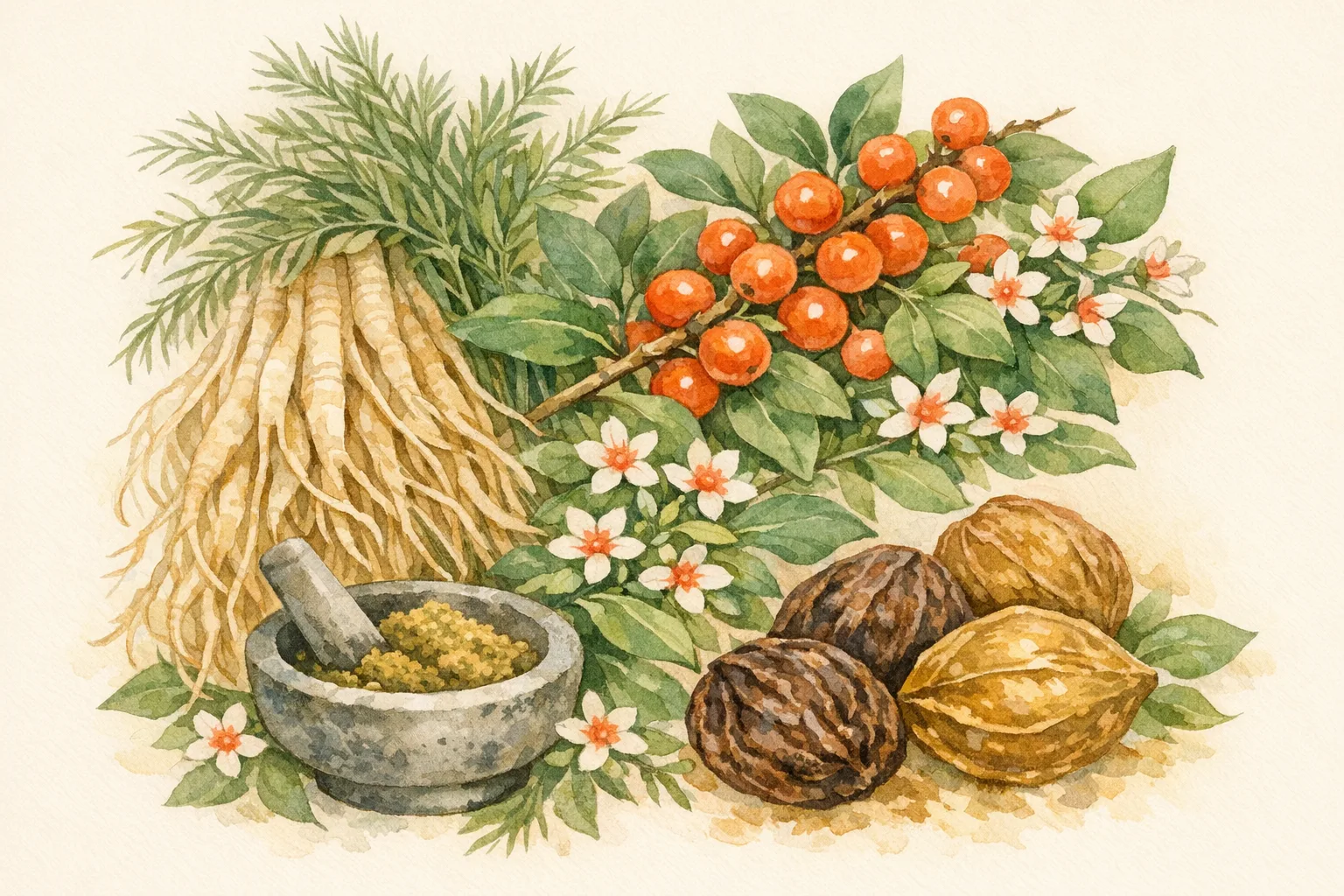
Ayurvedic medicine has been treating hormonal and reproductive conditions for over 5,000 years. In recent decades, researchers have started putting its key herbs through clinical trials. Here is what the evidence actually says.
Shatavari (Asparagus racemosus)
Shatavari is the most studied Ayurvedic herb for female fertility. A review published in Current Nutrition Reports found that Shatavari shows promise for fertility enhancement due to its active compounds including saponins and flavonoids.
A randomized, double-blind, placebo-controlled trial published in Frontiers in Endocrinology tested standardized Shatavari root extract on 70 women with polycystic ovary syndrome. Key findings: a significant increase in endometrial thickness, a significant reduction in follicular count indicating improved follicular dynamics, and a significant reduction in perceived psychological stress. No serious adverse events occurred.
A separate 120-day randomized, double-blind clinical study published in Functional Foods in Health and Disease tested a standardized Shatavari extract on 75 perimenopausal women. Ovarian follicle count increased in both treatment groups, and dose-dependent changes in key reproductive hormones including anti-Müllerian hormone were observed. The researchers concluded the extract was a safe and effective intervention for hormone regulation.
A randomized controlled trial from the National Institute of Unani Medicine in Bangalore directly compared Shatavari to clomiphene citrate - a standard fertility drug - in 40 women with anovulatory infertility. The trial measured follicular growth, ovulation, and conception across two cycles.
Ashwagandha (Withania somnifera)
Ashwagandha is an adaptogen that helps your body regulate its stress response. Chronic stress raises cortisol, which suppresses the hormonal signals that govern ovulation.
A review published in PMC found that Ashwagandha can positively affect the endocrine system, including improving thyroid function, normalizing adrenal activity, and improving functioning of the reproductive system. The main mechanism involves the hypothalamic-pituitary-adrenal axis: Ashwagandha reduces cortisol, which can restore normal hormonal cycling.
According to Examine.com, in chronically stressed adults taking Ashwagandha at 300 to 500 mg daily for 60 to 90 days, cortisol was reduced by 20% to 50% from baseline. A 2023 prospective study from an IVF center in Mumbai enrolled 45 women with diminished ovarian reserve - anti-Müllerian hormone below 1.0 ng/mL - preparing for IVF cycles. Separately, researchers noted that elevated follicle-stimulating hormone showed normalization in women who supplemented with Ashwagandha versus placebo (PubMed PMID 32956834).
Triphala and Guduchi
A clinical study published in PMC evaluated a full Ayurvedic treatment regimen on 40 women with subfertility and polycystic ovary syndrome. The protocol used Triphala in stage one to clear the body and normalize reproductive channels, followed by Shatavari, Shatapushpa, and Guduchi in stage two to enhance follicular maturity and hormone balance. Guduchi (Tinospora cordifolia) contains berberine alkaloids that enhance glucose tolerance and improve insulin sensitivity - both important in polycystic ovary syndrome where insulin resistance disrupts ovulation. A review published in PMC confirmed Triphala's role as a natural antioxidant that helps reduce insulin resistance, and Guduchi's anti-inflammatory action that addresses the root of ovarian cyst formation.
Conventional vs Natural
| Factor | IVF (Conventional) | Ayurvedic Protocol (Natural) |
|---|---|---|
| Average cost | $15,000 - $30,000 per cycle | Fraction of IVF cost |
| Total spend (average patient) | ~$50,000 across 2-3 cycles | Significantly lower |
| Live birth rate (low anti-Müllerian hormone) | 13% to 19% per cycle | Omioni program: 84% over 12 months |
| Timeline | 4-6 weeks per cycle | 3-6 months for full protocol |
| Side effects | Bloating, mood changes, ovarian hyperstimulation risk | Generally well-tolerated; no serious adverse events in trials |
| Addresses root cause | No - bypasses hormonal dysfunction | Yes - targets the hormonal imbalance itself |
| Insurance | Covered in 22 states; excluded for 61% of workers on self-insured plans | Not insurance-dependent |
IVF works around your hormonal problem. It retrieves eggs directly, fertilizes them outside your body, and transfers the embryo. If the embryo does not implant, the hormonal environment that caused the problem is still there.
Ayurvedic protocols work to fix the hormonal environment itself. The goal is a body that can conceive - and stay pregnant - naturally.

The Ayurvedic Approach
Ayurveda does not treat symptoms. It treats imbalances.
In Ayurvedic reproductive medicine, hormonal problems are understood through the lens of the doshas - specifically imbalances in Pitta (governing metabolism and transformation) and Kapha (governing structure and fluidity). Polycystic ovary syndrome is a Kapha disorder where excess accumulation blocks the reproductive channels and disrupts ovulation.
A complete Ayurvedic fertility protocol has four parts.
Herbal support. Shatavari to balance estrogen-like compounds and support uterine lining growth. Ashwagandha to lower cortisol and restore normal hormonal signaling. Guduchi to reduce inflammation and improve insulin sensitivity. Triphala to clear metabolic waste and improve digestive fire. Doses, timing, and combinations matter. A qualified Ayurvedic practitioner builds your protocol based on your specific imbalance.
Diet. Warm, whole, anti-inflammatory foods. The Ayurvedic fertility diet reduces processed sugar, refined carbohydrates, and cold or heavy foods that increase Kapha. It emphasizes bitter vegetables, ginger, turmeric, cumin, and seasonal produce. These changes directly reduce insulin resistance - a root driver of polycystic ovary syndrome and irregular ovulation.
Stress reduction. Chronic stress is one of the primary drivers of hormonal imbalance. A review published in PubMed confirmed that stress disturbs reproductive health by inducing oxidative stress, which affects ovary physiology and egg quality. Yoga, pranayama breathing, and adequate sleep are core parts of the Omioni protocol.
Cycle tracking and targeted timing. Understanding your personal cycle, your fertile window, and how your hormones shift through the month allows targeted intervention. This knowledge alone improves conception rates.

What You Can Do Today
Get an anti-Müllerian hormone test. This is a simple blood test that measures your ovarian reserve. Many women who have been trying to conceive for months have never had this test. It should inform every decision that follows. Ask your doctor for it at your next appointment.
Track your cycle for one full month. Use a basal body temperature thermometer or an ovulation predictor kit. Many women are trying to conceive on the wrong days. Knowing your actual ovulation window costs nothing.
Remove three things from your diet this week. Refined sugar, processed seed oils, and excess caffeine are all documented disruptors of hormonal balance. Removing them reduces the inflammatory load that is working against your hormones.
Start a stress reduction practice. Ten minutes of morning breathing - inhale for 4 counts, hold for 4, exhale for 6 - can meaningfully reduce cortisol over time. When cortisol drops, your reproductive hormones have room to function.
Talk to a practitioner before buying supplements. Shatavari, Ashwagandha, and Triphala are powerful. The right dose depends on your specific imbalance. Do not self-prescribe based on what worked for someone else.
When to Consider Each Path
IVF is the right choice when both fallopian tubes are blocked, when there is severe male factor infertility with very low sperm count, or when a structural problem in the uterus cannot be resolved through other means.
But for women with hormonal imbalance, polycystic ovary syndrome, low anti-Müllerian hormone without structural causes, stress-related irregular cycles, or unexplained infertility - the Ayurvedic path deserves to come first. It costs less. It has no serious side effects. And it addresses the root cause.
The Omioni program is a 12-month Ayurvedic fertility protocol based in Las Vegas. It combines individualized herbal protocols, dietary guidance, cycle tracking, and stress reduction coaching. We offer a money-back guarantee: if you do not get pregnant in 12 months, you get your money back.
If you have been through IVF cycles that failed, or if you have been told your anti-Müllerian hormone is too low to try naturally, call us before you give up.
Call Omioni at 972-282-3930. We are based in Las Vegas and we are available to speak with you directly.
Frequently Asked Questions
What does it mean to have low anti-Müllerian hormone?
Anti-Müllerian hormone is produced by the cells in your ovaries and reflects how many eggs you have in reserve. A low level means your reserve is lower than average for your age. It does not mean you cannot conceive. Many women with low anti-Müllerian hormone conceive naturally or with Ayurvedic support. IVF with low anti-Müllerian hormone has a live birth rate of 13% to 19% per cycle, according to published studies.
Can Ayurveda really balance hormones?
The clinical evidence is growing. Shatavari has been shown in randomized controlled trials to improve follicular count, endometrial thickness, and perceived stress in women with polycystic ovary syndrome. Ashwagandha has been shown in multiple trials to reduce cortisol by 20% to 50% in chronically stressed adults. When cortisol drops, the hormonal signals that drive ovulation can resume. These effects have been measured in human clinical trials.
How long does an Ayurvedic fertility protocol take?
Most women begin to notice changes in their cycle within 6 to 12 weeks. A full protocol typically runs 3 to 6 months, depending on the degree of imbalance. The Omioni program is 12 months, which allows time for the body to fully reset, hormone levels to stabilize, and conception and early pregnancy support. Egg quality takes roughly 90 days to reflect any change in your hormonal environment - which is why short programs rarely work.
Is it safe to take Ayurvedic herbs while trying to conceive?
Shatavari, Ashwagandha, Triphala, and Guduchi have all been studied in clinical trials with no serious adverse events reported. However, Ashwagandha should be stopped as soon as pregnancy is confirmed, as it has not been fully studied during pregnancy. Always work with a qualified practitioner who can adjust your protocol based on your health history.
Do I need to stop trying IVF to start an Ayurvedic protocol?
Not necessarily. Many women use Ayurvedic support between IVF cycles to improve their hormonal environment and egg quality. Some research suggests that reducing oxidative stress and inflammation before an IVF cycle may improve outcomes. That said, some herbs can interact with fertility medications, so your Ayurvedic practitioner and your reproductive endocrinologist need to be in communication.
What is the difference between a wellness supplement and an Ayurvedic protocol?
A supplement is a single ingredient you add to your routine. An Ayurvedic protocol is a system - herbs, diet, lifestyle, timing, and tracking - all calibrated to your specific imbalance. Buying Shatavari from a health food store is not the same as an individualized Ayurvedic fertility protocol. The dose, the form, the timing relative to your cycle, and the combination with other herbs all matter. The Omioni program includes practitioner-guided protocol design from start to finish.
What if I have been told I am too old or my hormone levels are too low?
A study published in PubMed covering 1,287 IVF patients found that in younger patients, anti-Müllerian hormone levels do not predict pregnancy outcomes. Egg quality - which Ayurvedic protocols directly support through antioxidant herbs and stress reduction - matters more than quantity alone. Call us at 972-282-3930 and tell us your story. Many of those stories had different endings than doctors predicted.
You can also read more about natural approaches to low anti-Müllerian hormone and the specific Ayurvedic herbs used in our fertility protocols on the Omioni blog.
Medical Disclaimer: This article is for informational purposes only and does not constitute medical advice. The information provided is not a substitute for professional medical diagnosis, treatment, or guidance. Always consult a qualified healthcare provider before starting any new supplement, herb, or health protocol, especially when trying to conceive. Individual results vary. The success rate referenced reflects outcomes within the Omioni program and is not a guarantee of individual results.